Fire Station #31 serves the Windermere community in southwest Edmonton as a net-zero energy civic building that integrates emergency response infrastructure with sustainable design. Positioned within a rapidly developing neighbourhood surrounded by natural systems and civic amenities, the station supports efficient response times while acting as a public landmark aligned with the City of Edmonton’s Energy Transition Strategy.
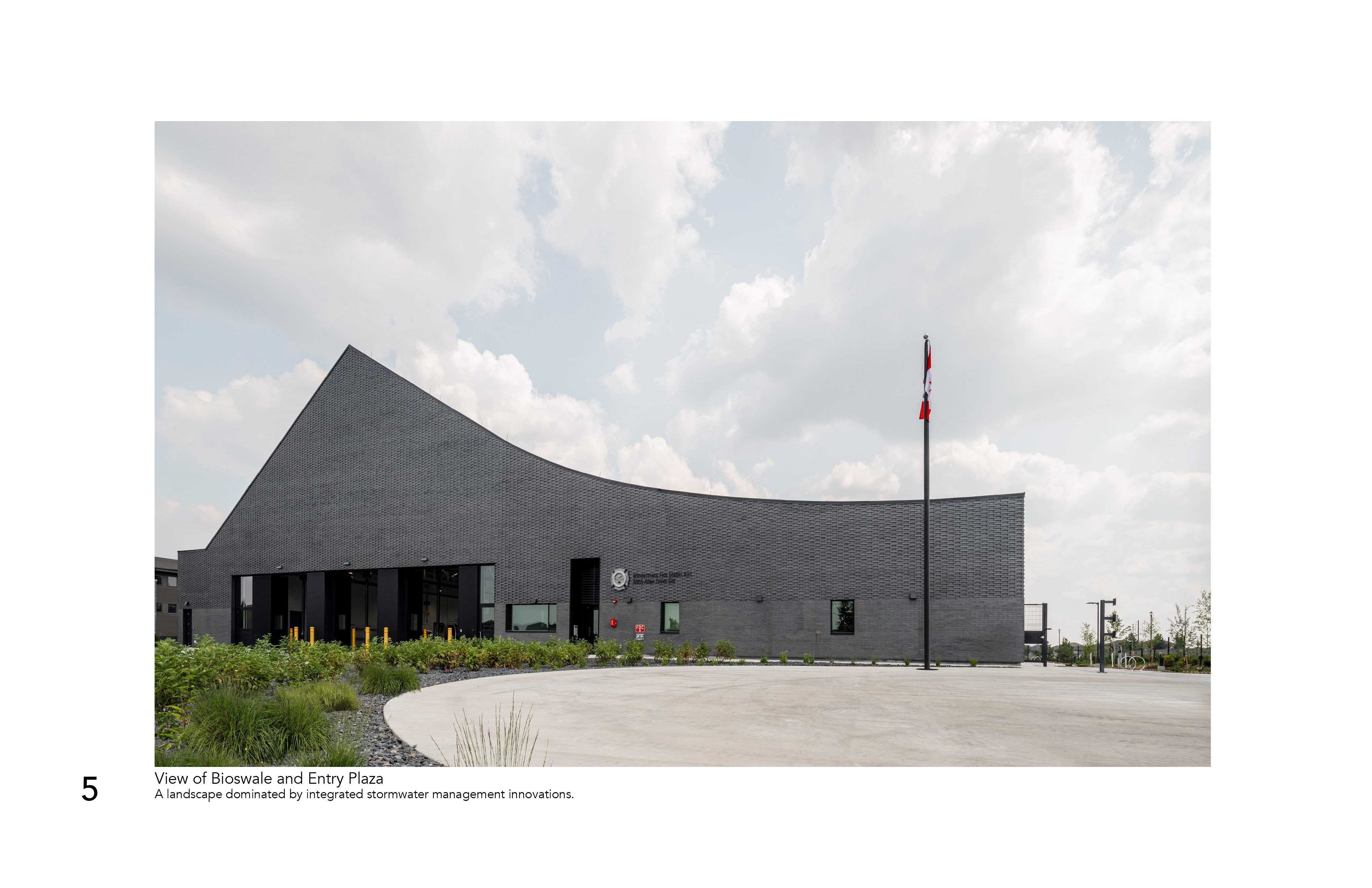
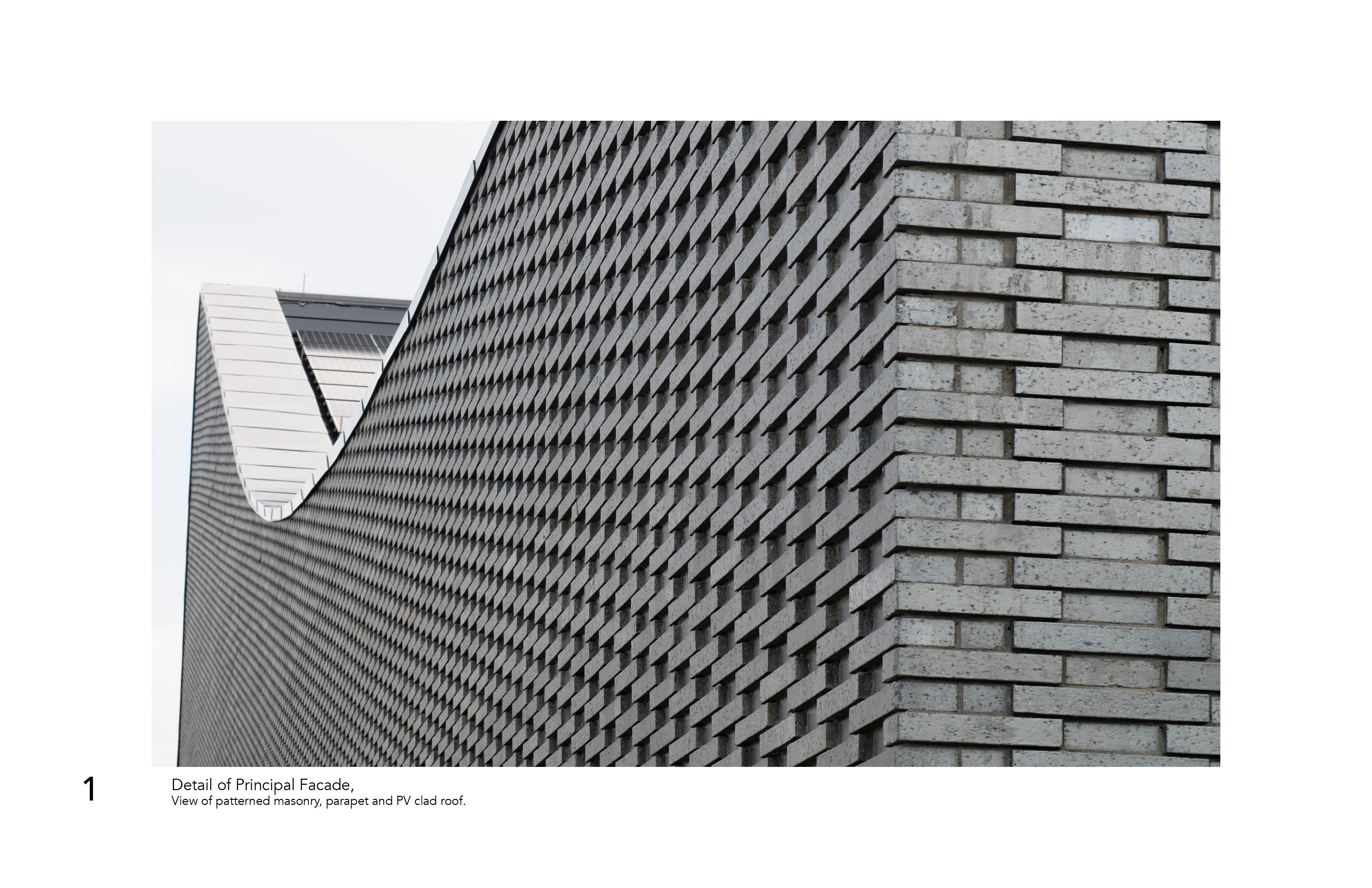
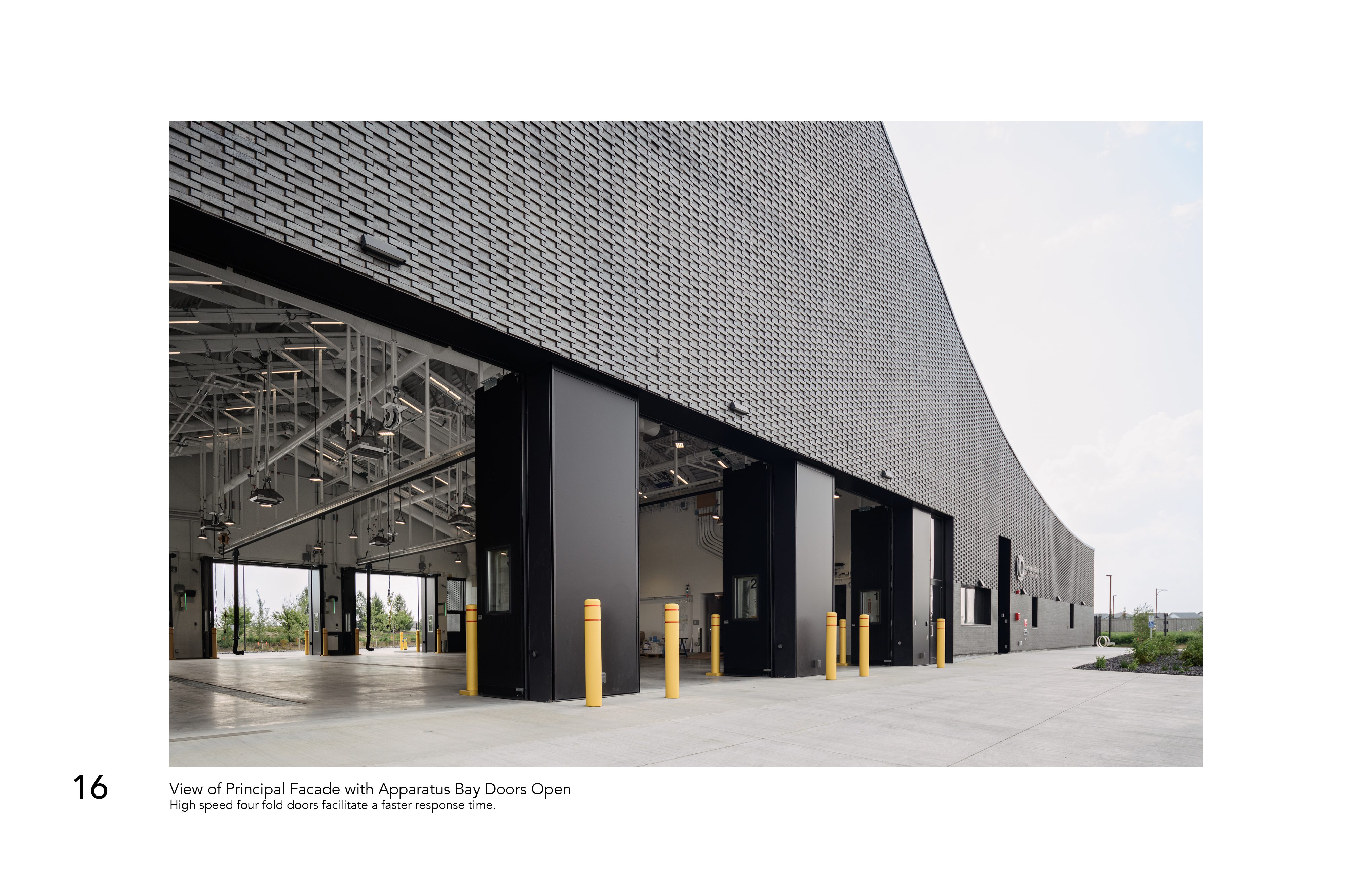
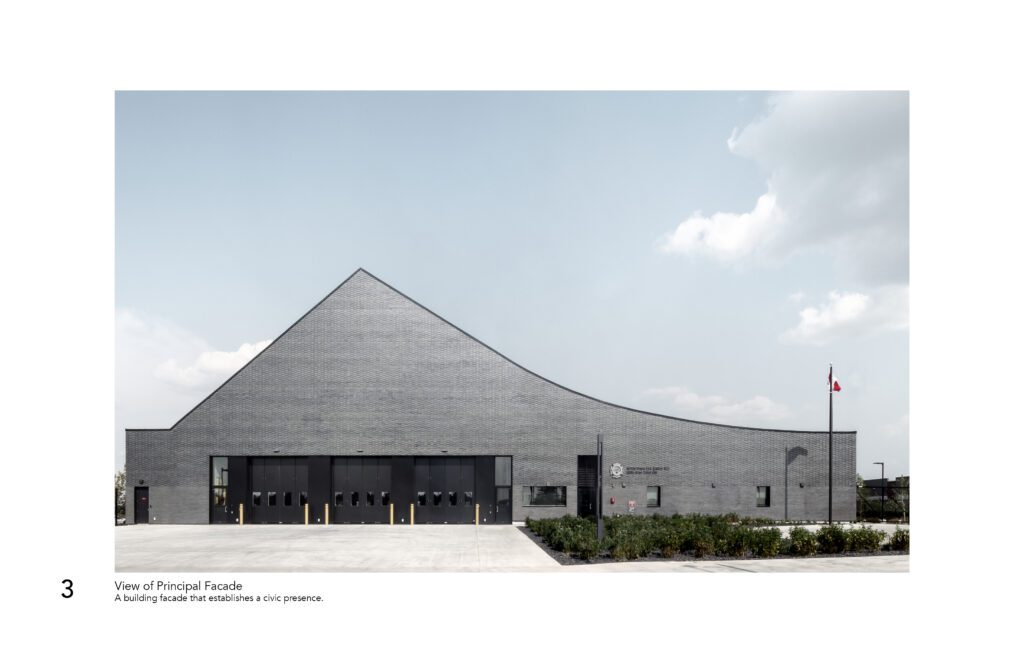
The single-storey, three-bay facility references traditional fire station forms such as pitched roofs and tower elements, while reinterpreting them through contemporary material and performance goals. Brick cladding provides civic presence and texture, shifting from regular to woven patterns to animate façades in prairie light.
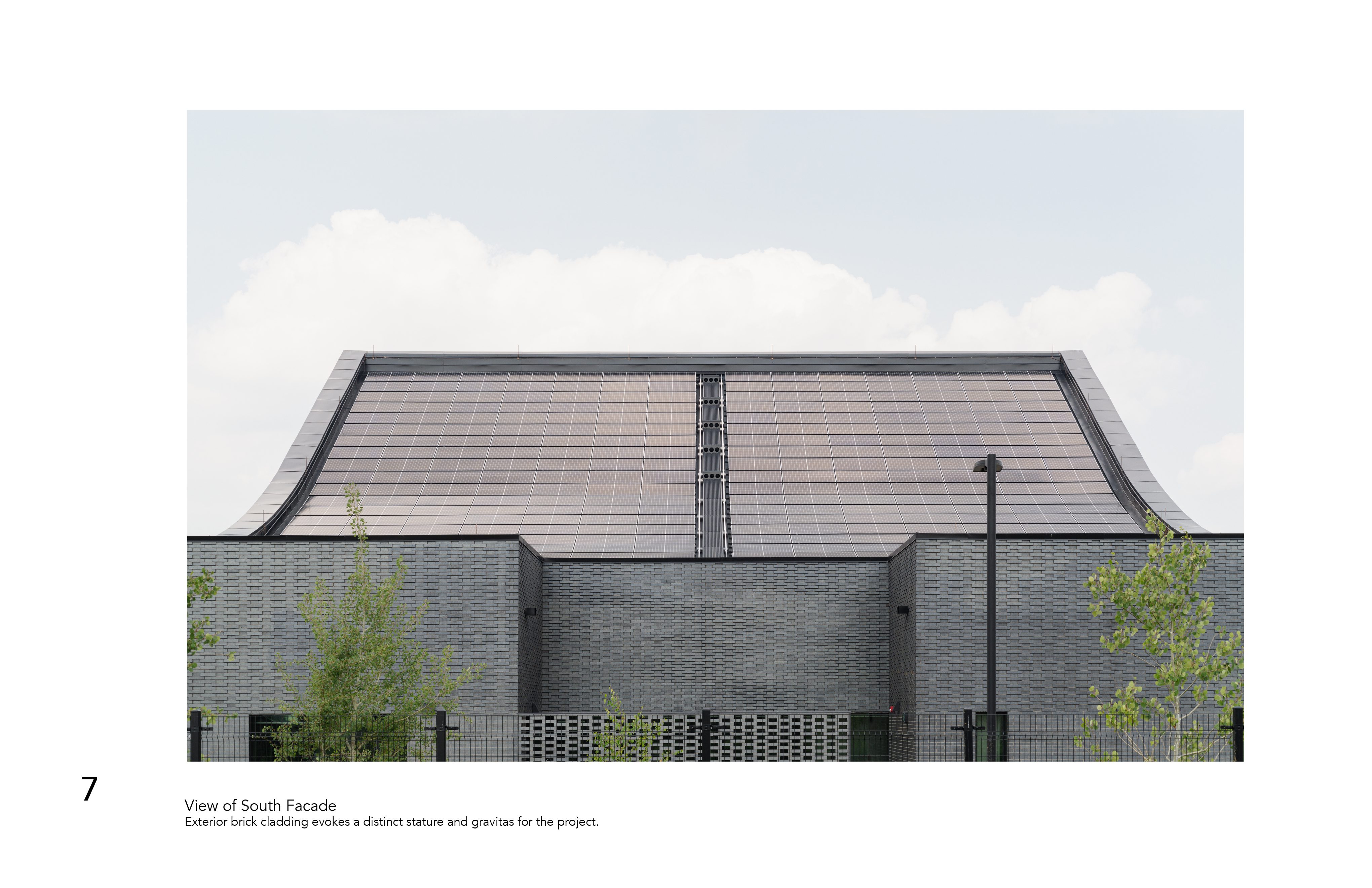
Sustainability strategies include a photovoltaic roof optimized for solar gain, geothermal heating and cooling, bioswale-based stormwater management, and a high-performance envelope, enabling net-zero operation.
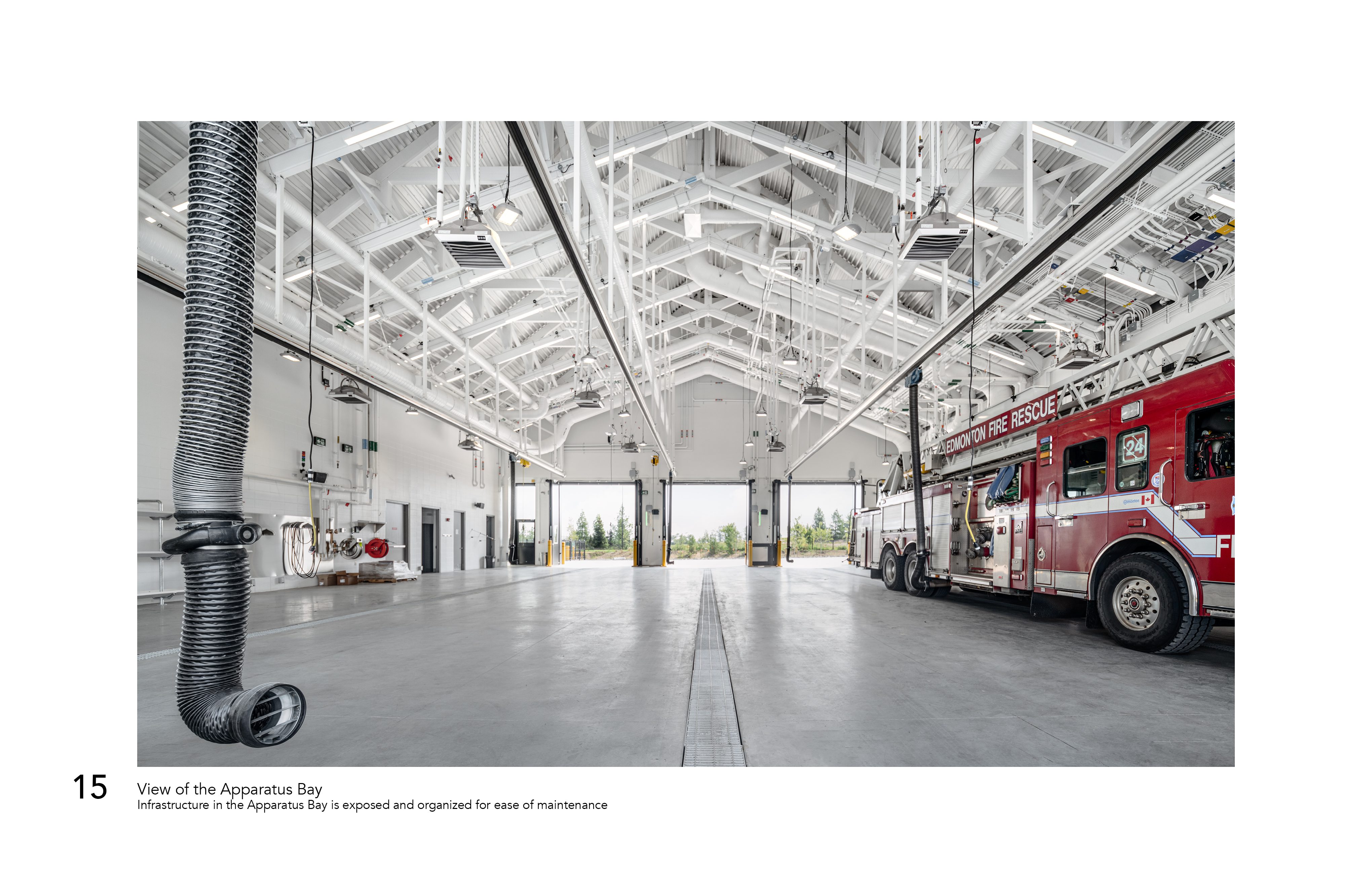
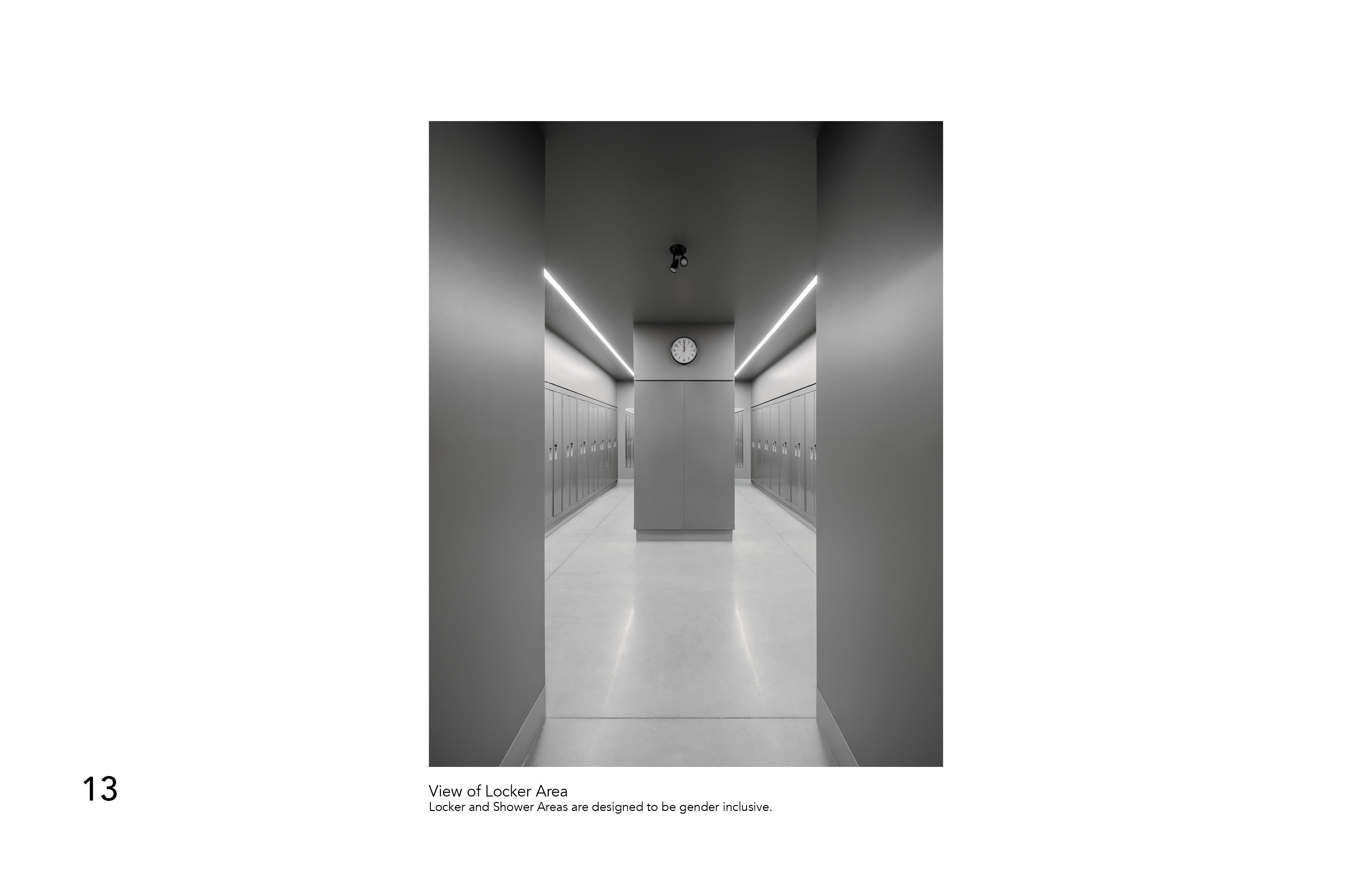
Internally, a clear functional separation between apparatus bays and living quarters supports rapid response and daily life. Glazing and courtyard connections enhance daylight, ventilation, and wellbeing, reinforcing the station’s dual role as both a workplace and a “second home” for firefighters.
JURY COMMENT(S)
The jury appreciated Windermere Fire Station #31 for its formal, material, and sustainability strategies. Formally, the building presents a highly expressive, sculptural presence that establishes a strong thematic centre within its community, lending civic identity to a typically utilitarian programme. Materially, brick is employed with notable skill and inventiveness, demonstrating both craft and control while conveying a sense of permanence. Sustainability is most clearly articulated through the array of rooftop solar panels, which act not as an applied layer but as a generator of form.
These aspects are tightly interwoven: the formal expression is derived from the positioning and optimisation of the solar panels, and that expression is realised through the modulation of brick. This integration avoids separating performance and appearance, allowing environmental response to shape architectural identity in a direct and legible way.