


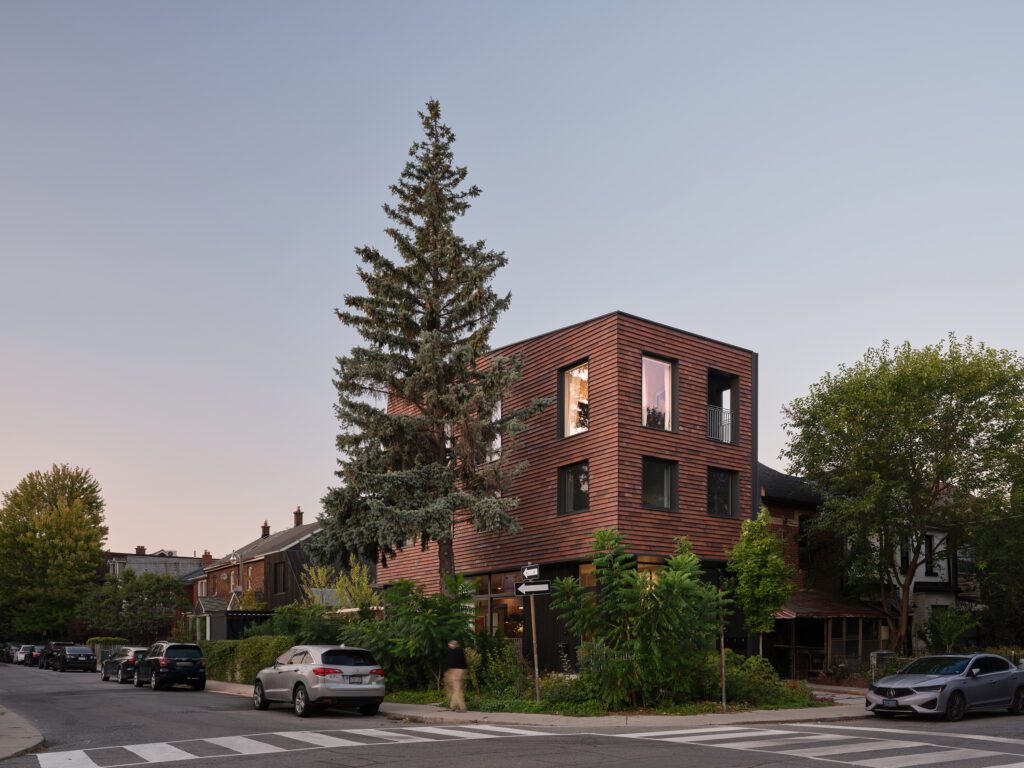
Ulster House redefines urban housing by demonstrating how thoughtful design can transform a conventional single-family lot into a sustainable and replicable multiplex model. Designed by LGA Architectural Partners for founders Janna Levitt and Dean Goodman, the project converts a mature neighbourhood site into five compact, adaptable homes that balance density with gracious living.
The development combines a three-storey terracotta-clad main building with a complementary laneway house clad in Shou Sugi Ban cedar. Each unit features a private entrance, outdoor amenity space, daylight-rich interiors, and flexible layouts that support diverse households, from downsizers to multi-generational families.
Sustainability is embedded throughout, with all-electric systems, rooftop solar, durable low-maintenance materials, and biodiverse native landscaping that doubles the planted area. As a full-scale demonstration project, Ulster House informed Toronto’s 2023 zoning reforms, advancing a more inclusive and environmentally responsible model for urban intensification.
JURY COMMENT(S)
LGA Architectural Partners’ Ulster House introduces five dwelling units, each provided with individual grade-related access, on the former site of a single-family home. The jury noted the compact elegance of the resulting spaces and the careful support of multiple possible modes of communal living. Most compelling, however, was the architects’ engagement with the limits of municipal regulatory frameworks, producing a project that thoughtfully challenged local bylaws, leading to broader regulatory change. This project speaks eloquently to the potential of the missing middle to address the housing crisis in contemporary Canadian cities.
Image Gallery
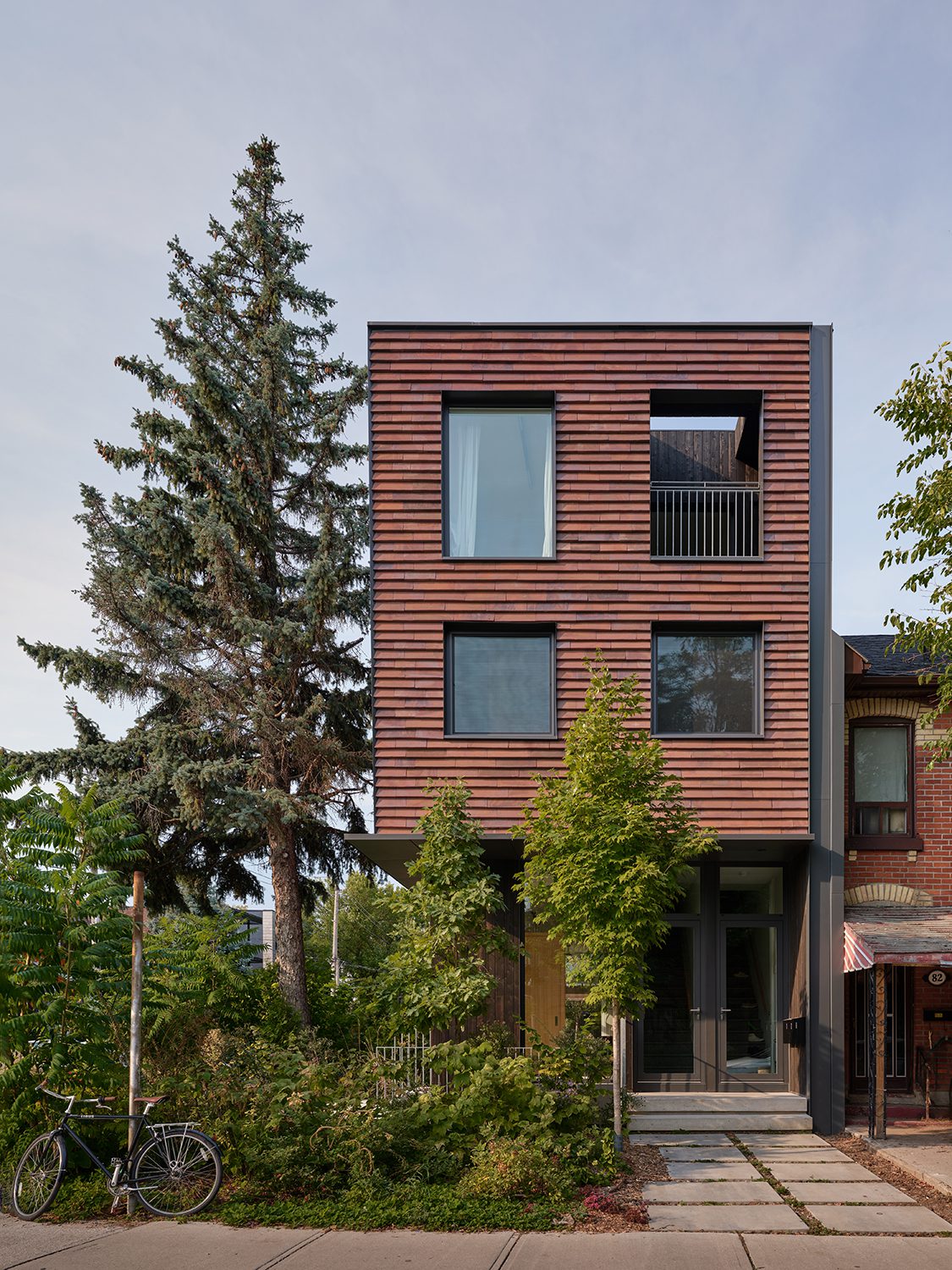
Each unit is accessed from its own front door, with Ulster Street entrances subtly revealing the property’s increased density.
(c)DOUBLESPACE
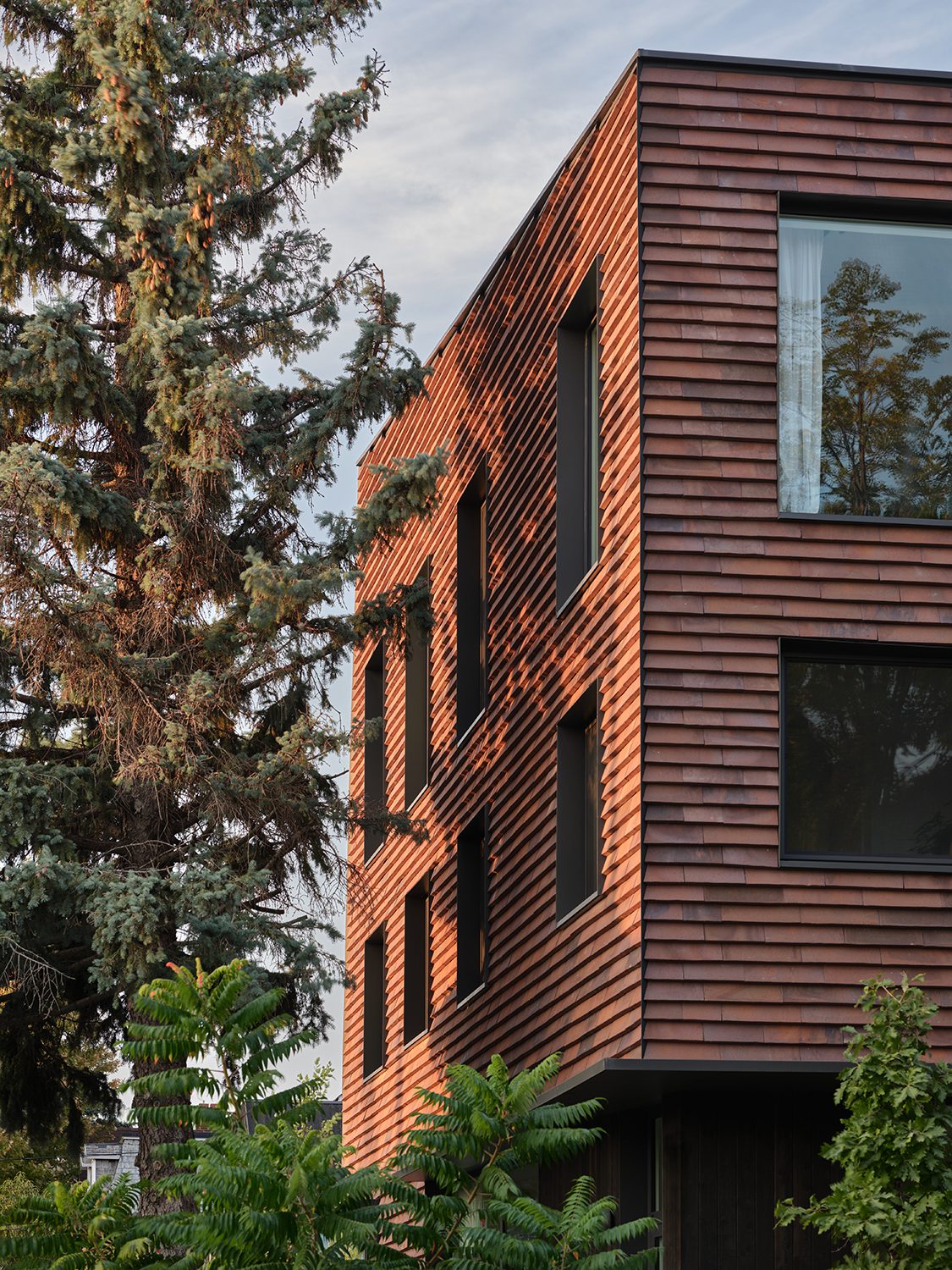
Terracotta tiles reference neighboring brick houses, establishing visual continuity without directly replicating their materiality.
(c)DOUBLESPACE
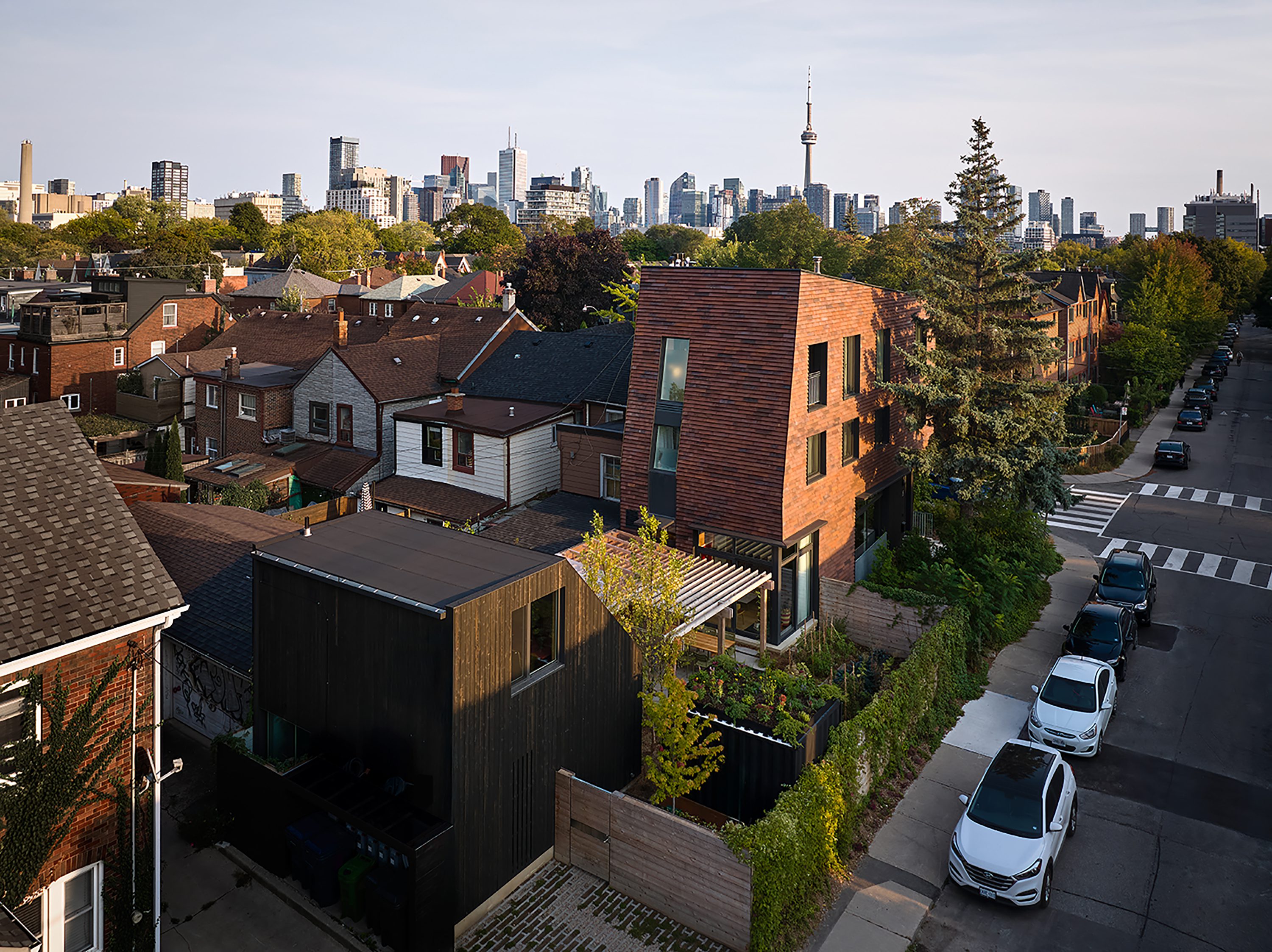
Situated in a mature Toronto neighborhood, the five-unit condominium replaces a single residence, prioritizing gentle density, quality of life, and carbon reduction.
(c)DOUBLESPACE
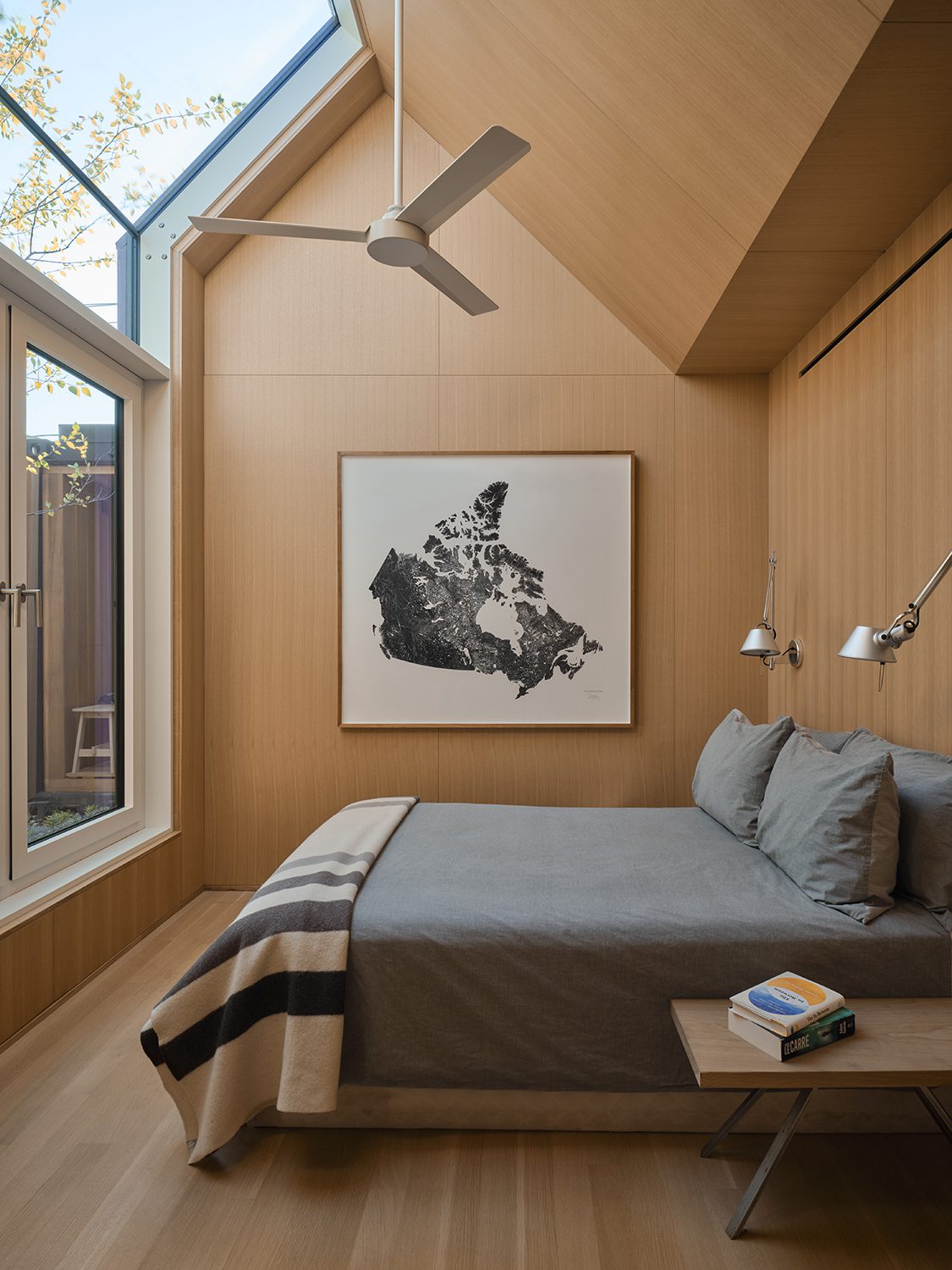
The angular form responds to planning constraints, transformed into an opportunity for a generous skylight and reduced energy use.
(c)DOUBLESPACE
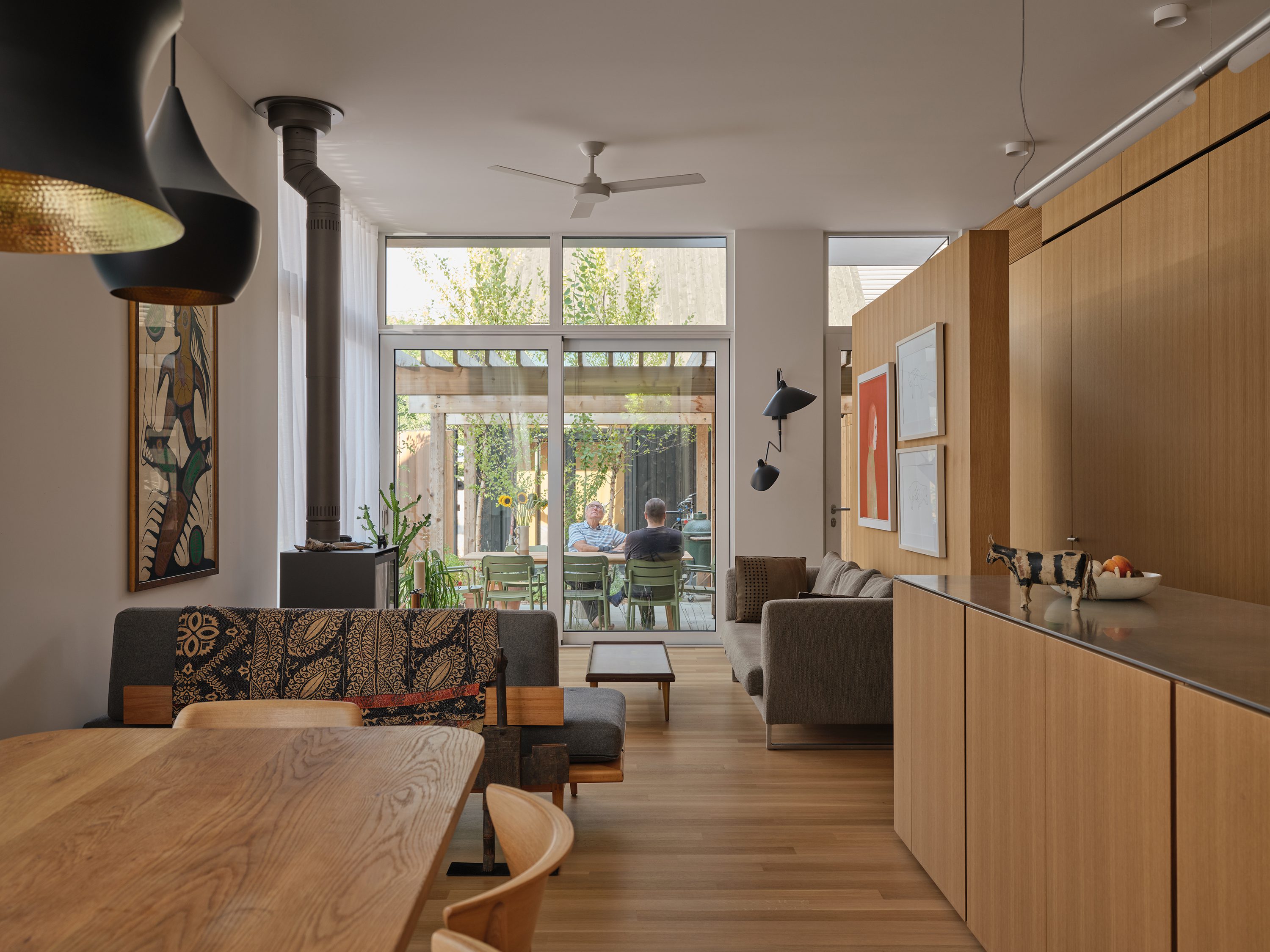
View from dining room to courtyard, where floor-to-ceiling sliding glass doors dissolve the boundary between indoors and out.
(c)DOUBLESPACE
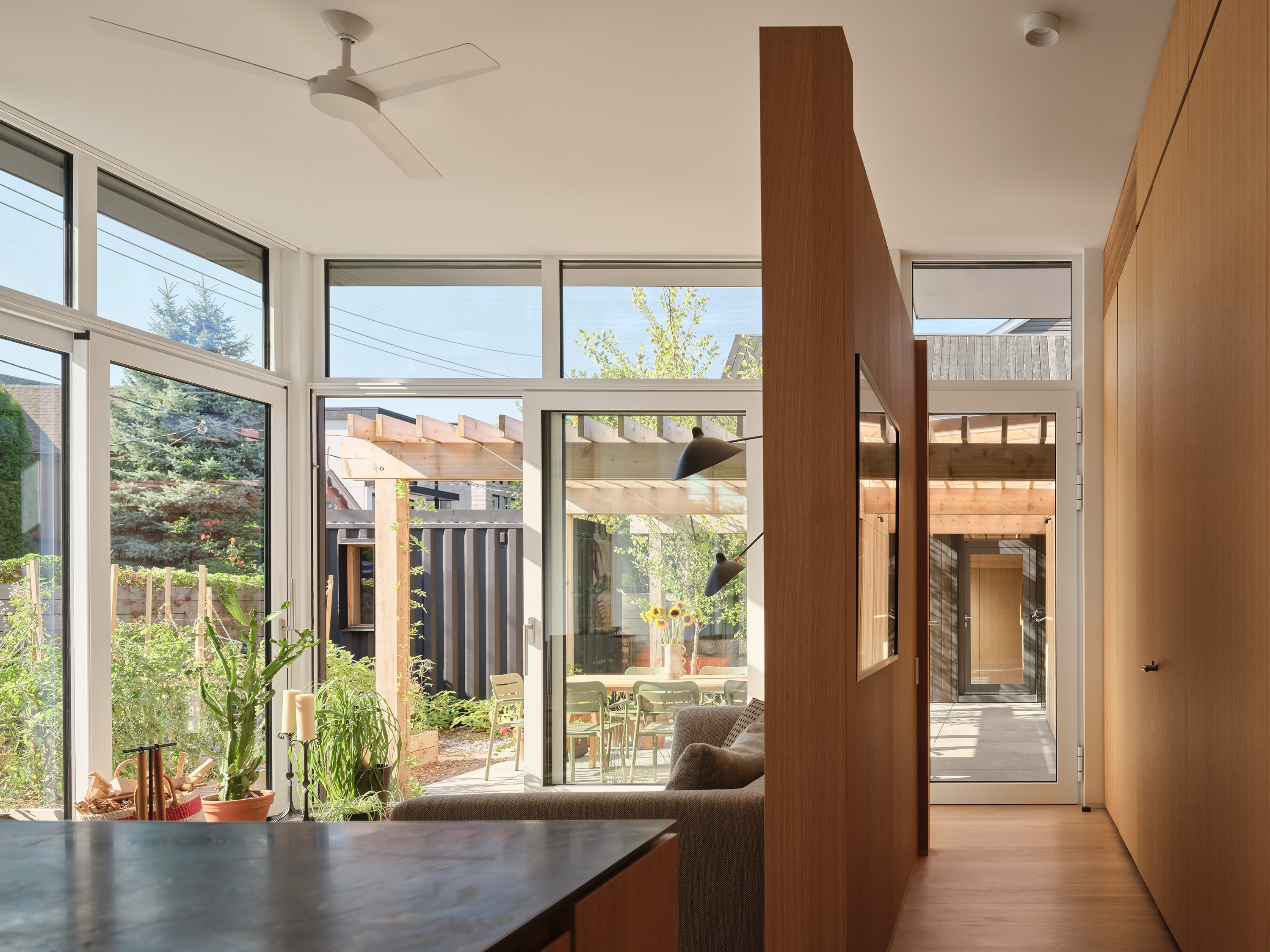
An oak-clad partition forms a corridor to the rear exit, screening the powder room while allowing daylight above.
(c)DOUBLESPACE