



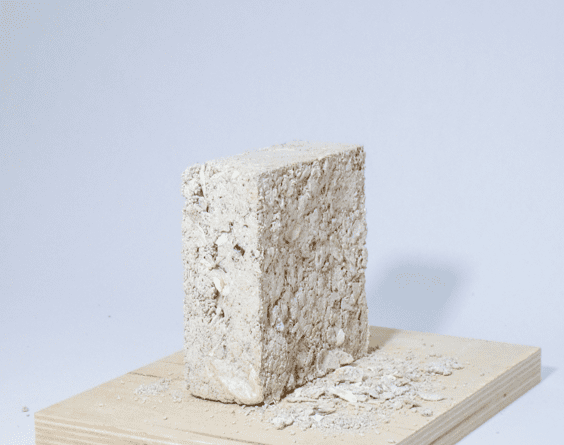
This project emerged from a persistent contradiction along British Columbia’s coastline: while the construction industry imports carbon-intensive materials from distant sources, mountains of durable oyster and mussel shells accumulate as waste behind local restaurants and aquaculture operations. The built environment is responsible for 37% of global GHG emissions, with Portland cement accounting for nearly 7% of CO₂ output through the pyro-processing of limestone. Shells, composed of the same calcium carbonate as limestone, offer a chemically adjacent but ecologically distinct alternative. Shells are pre-formed by living organisms, requiring no quarrying, and when left uncalcined, retaining their mineral structure and embodied carbon.
JURY COMMENT
This is a highly compelling ‑research project that reframes oyster and mussel shell waste from BC’s aquaculture and restaurant industries as a viable, low‑carbon architectural material.
Rigorous hands‑on experimentation, quantitative analysis, and architectural integration resulted in 3 distinct shell‑based applications, embedding material production within a working coastal facility.
ShellStone shows exceptional clarity, originality and depth, grounding sustainability claims in material chemistry, regional supply data, and cultural context, including Indigenous stewardship practices.