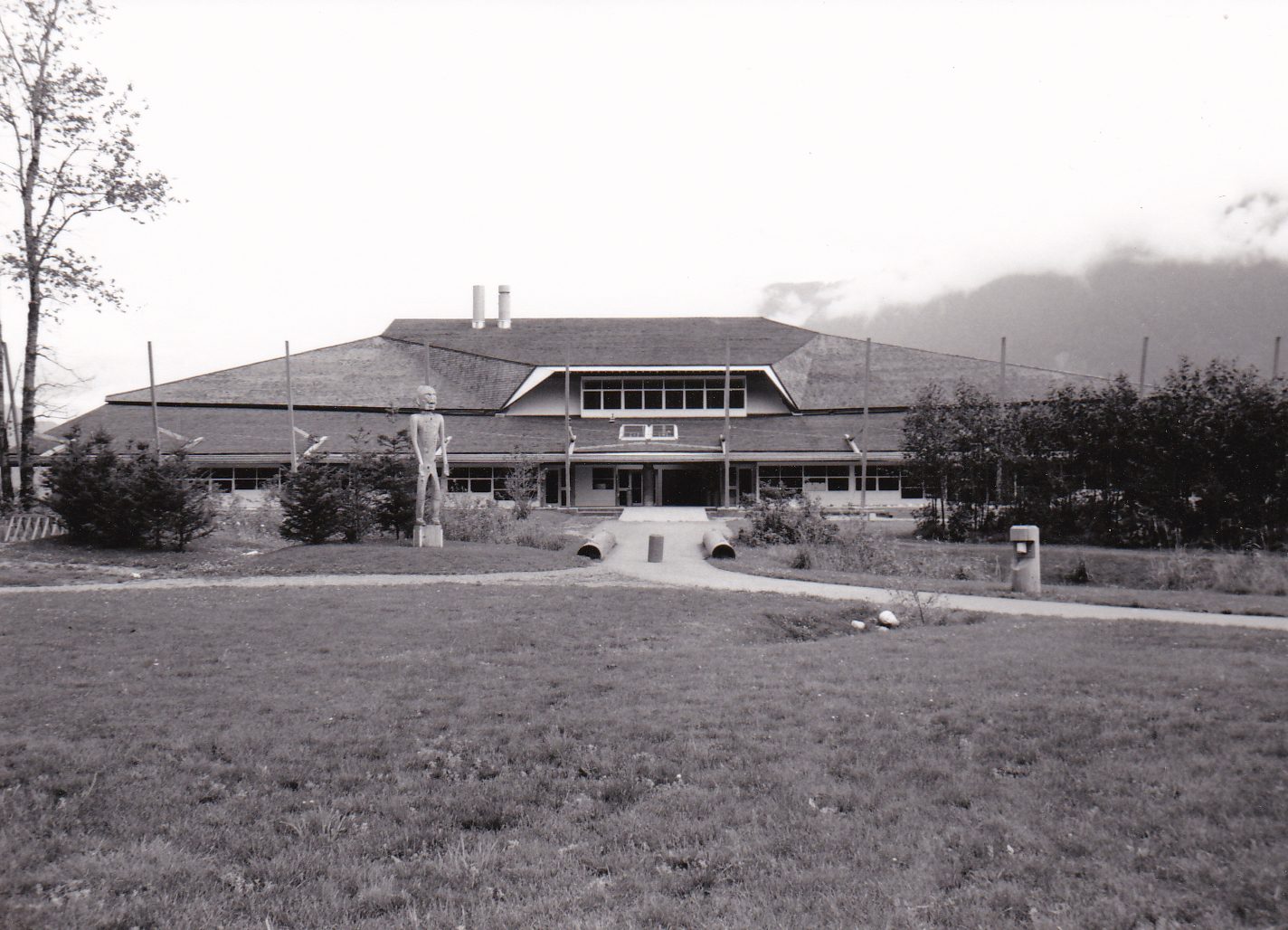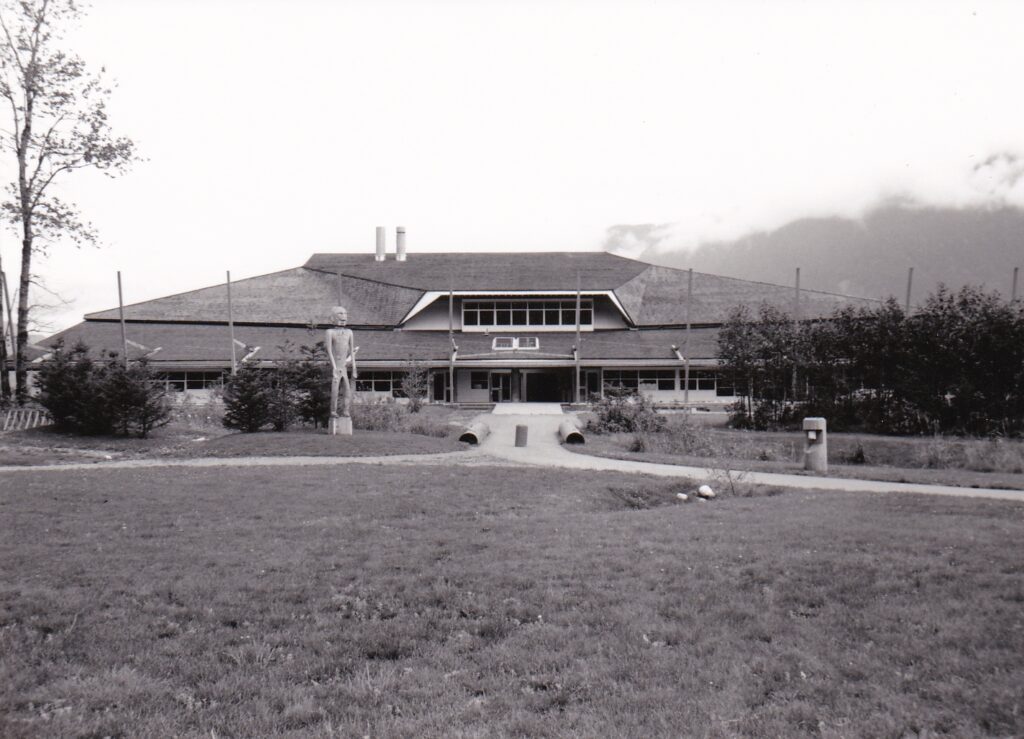
Sq’éwqel Community School in stands as a landmark project in the evolution of Indigenous education and architecture in Canada. Completed in the early 1990s for a Coastal Salish community near Agassiz British Columbia, the school was designed by Patkau Architects, a Vancouver-based practice internationally recognized for its thoughtful and context-driven work. The Patkau firm was founded in 1978 by husband and wife John and Patricia. It is an example of a Canadian architecture firm with a woman in a leadership position.
Sq’éwqel Community School emerged during a pivotal period of change for Indigenous education. The 1990’s were the final years of Canada’s residential school system, the last one, at the George Gordon First Nation in Saskatchewan, closed in 1996. The residential schools were marked by forced assimilation and cultural suppression. “In 1972, the National Indian Brotherhood (now known as the Assembly of First Nations) produced a policy on Indigenous education called Indian Control of Indian Education. The policy was adopted by the Department of Indian Affairs and Northern Development (now Indigenous and Northern Affairs Canada)[i] as unofficial education policy. It identified the importance of local community control to improve education, the need for more Indigenous teachers, the development of relevant curricula and teaching resources in Indigenous schools, and the importance of language instruction and Indigenous values in Indigenous education.” [ii] In the following years, through initiatives associated with federal funding and provincial collaboration, First Nations communities increasingly gained authority over the design, administration, and cultural direction of their own schools. Sq’éwqel Community School represented the forefront of this broader shift, embodying a move away from institutional models toward community-centered learning environments rooted in local identity and self-determination. The school predates the 2008 establishment of a five-year Truth and Reconciliation Commission of Canada which had a mandate to learn from residential school survivors. The commission’s “Calls To Action” is a 94 point document that seeks to “. . . redress the legacy of residential schools and advance the process of Canadian reconciliation . . .”. Six of the points directly address Indigenous education, several calling for community participation and the development of culturally appropriate education programs. [iii]
From the outset, the design attracted national attention. During its design phase, the project (then known as Seabird Island School) received a Canadian Architect Award of Excellence, recognizing its innovative approach prior to the construction phase. The jury hailed it as the outstanding project for that year and stated that “This school will be a work of art – a model of how architecture can be deeply embedded in a particular place and culture. This is one kind of Canadian architecture at its best.”[iv] Following its completion, the building garnered several additional architectural honors, affirming both its design quality and its cultural significance. These include the Governor General’s Medal in Architecture, the Lieutenant Governor’s Medal in Architecture and the Canadian Wood Council Honour Award, all awarded in 1992. The school was described by architect, educator and historian Kenneth Frampton as an exemplar of critical regionalism “I suppose it could be said that the work of Patkau Architects comes very close to what I attempted to define in 1983 as Critical Regionalism. The Patkaus’ Seabird School exemplifies this in a particular way.”[v]
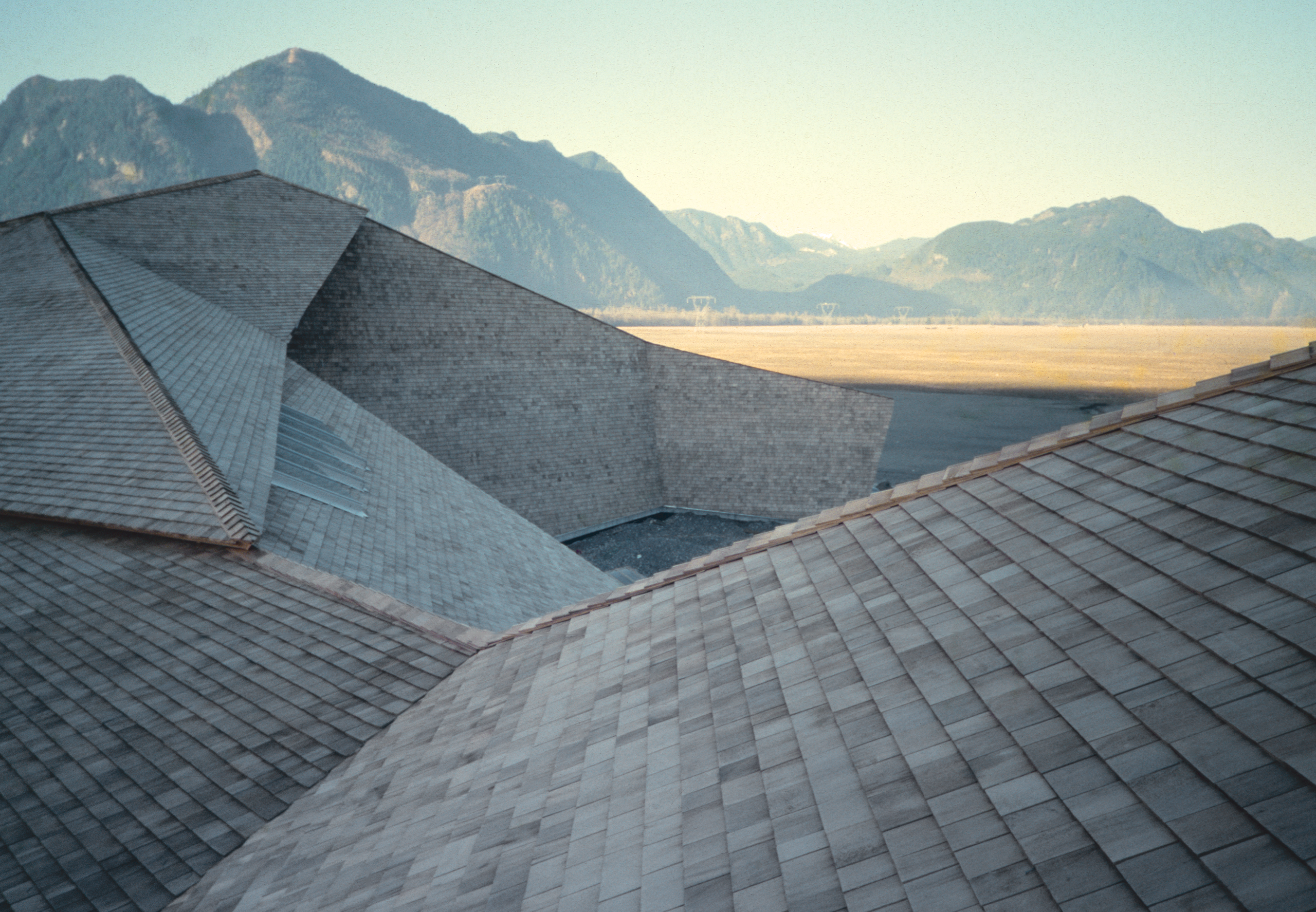
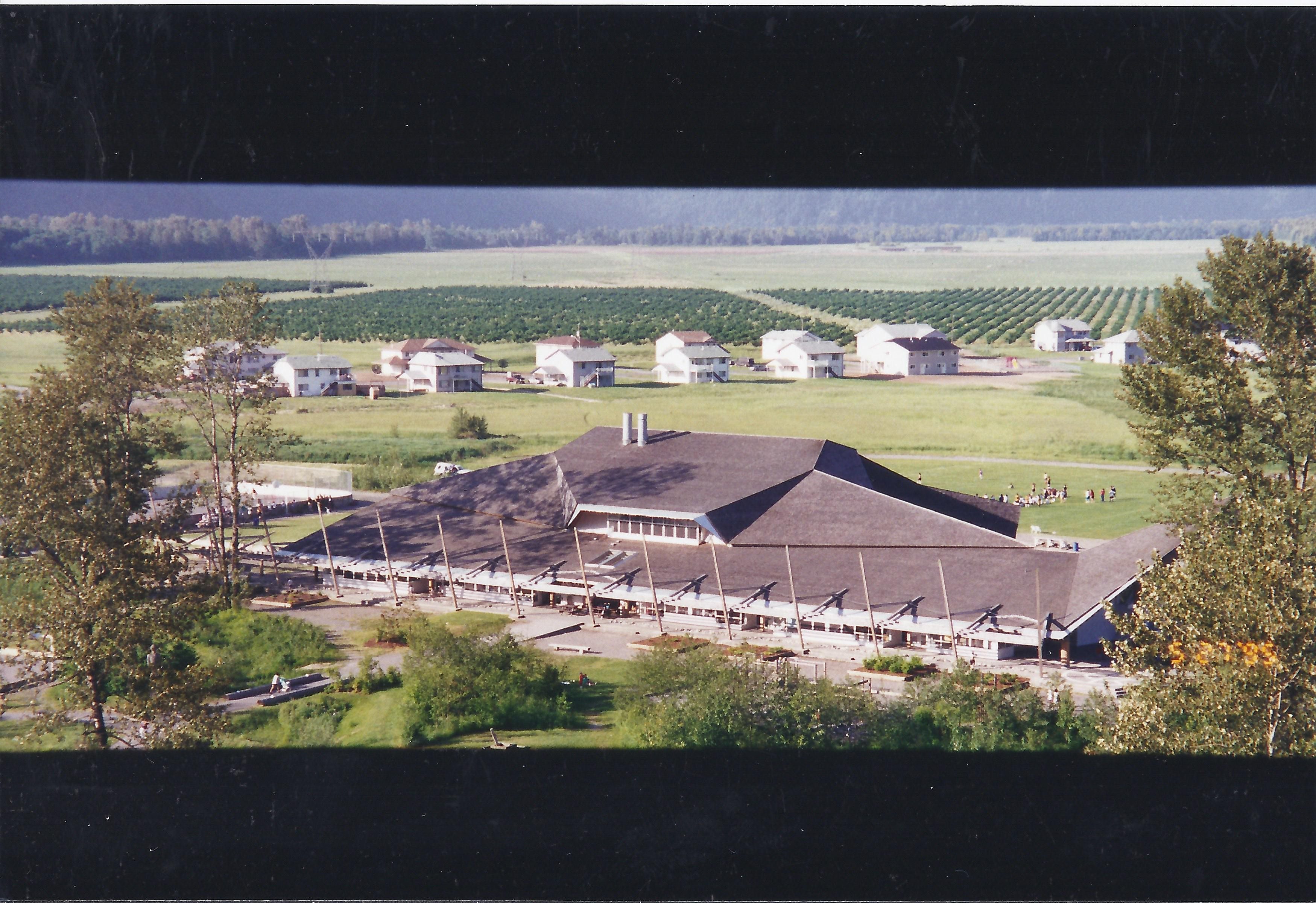
Architecturally, the school departed from the rigid, corridor-based layouts typical of conventional institutional buildings. Instead, Patkau Architects developed a form and spatial organization that emphasized gathering, openness, and connection to the landscape of the Fraser Valley. Natural light, warm materials, and communal spaces were central to the concept, reflecting Indigenous traditions of shared learning and collective life. The building’s scale and layout foster a sense of belonging rather than hierarchy, reinforcing the school’s role as a cultural and social heart of the community. The community is located on delta land in the Fraser Rivier and the siting of the school strongly responds to the specifics of its place and reinforces an existing green space as the central space formed by the school and a variety of community buildings. The more open entrance façade with generous windows, and generous eaves protecting play spaces from the rain, faces south-west. This area also provides direct access to classrooms and the home economics area with its kitchen that provides support for community events and feast days. The more closed rear of the school, with the gymnasium volumes, mitigate winds in the Fraser Valley.
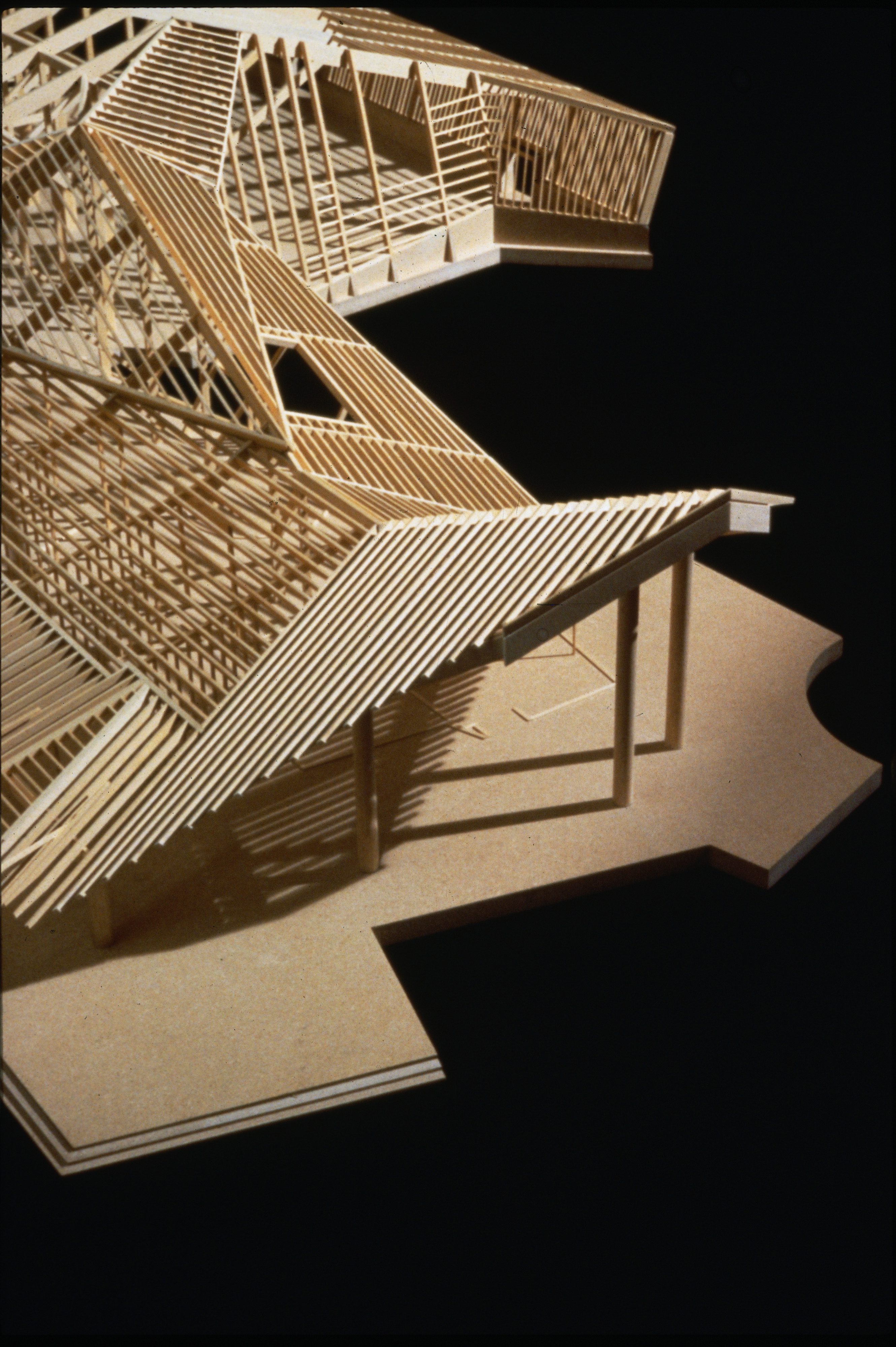
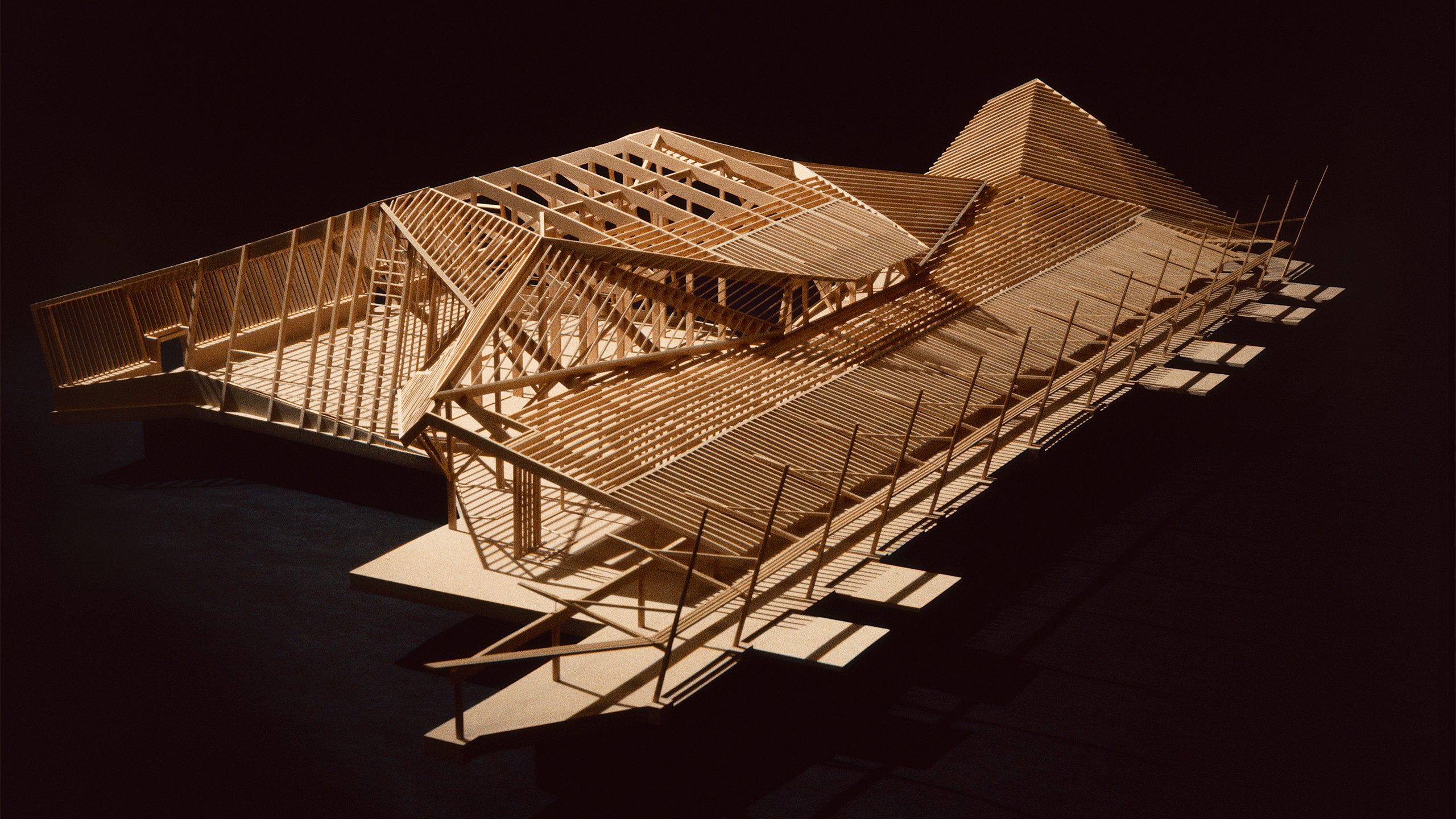
The detailed model that was created in the design stage served as guidance to community members during the construction stage, supplementing the traditional two-dimensional construction drawings. The structural concept was inspired by traditional Coastal Salish construction techniques interpreted here in contemporary large scale engineered wood members.
Importantly, Sq’éwqel Community School represented more than a new facility—it symbolized a profound transition. As Indigenous communities reclaimed control over education, architecture became a tool for cultural renewal. In contrast to the legacy of residential schools, which were often designed to isolate and discipline, this project demonstrated how design could support cultural continuity, dignity, and self-governance. Today, the school remains a touchstone in discussions of socially responsive architecture in Canada. It illustrates how built form can participate in reconciliation—not as a symbolic gesture alone, but as a lived, daily environment shaped by and for the community it serves. [vi]